
Services
Managed Operations
TriluxTech runs ServiceNow environments after go-live, monitoring ITSM, ITOM, CMDB, security, integrations and performance around the clock with documented runbooks and scheduled optimisation. The model is proactive — finding and correcting degradation before it reaches users, rather than waiting on tickets.
Keeping platforms stable, scalable, and continuously improving.
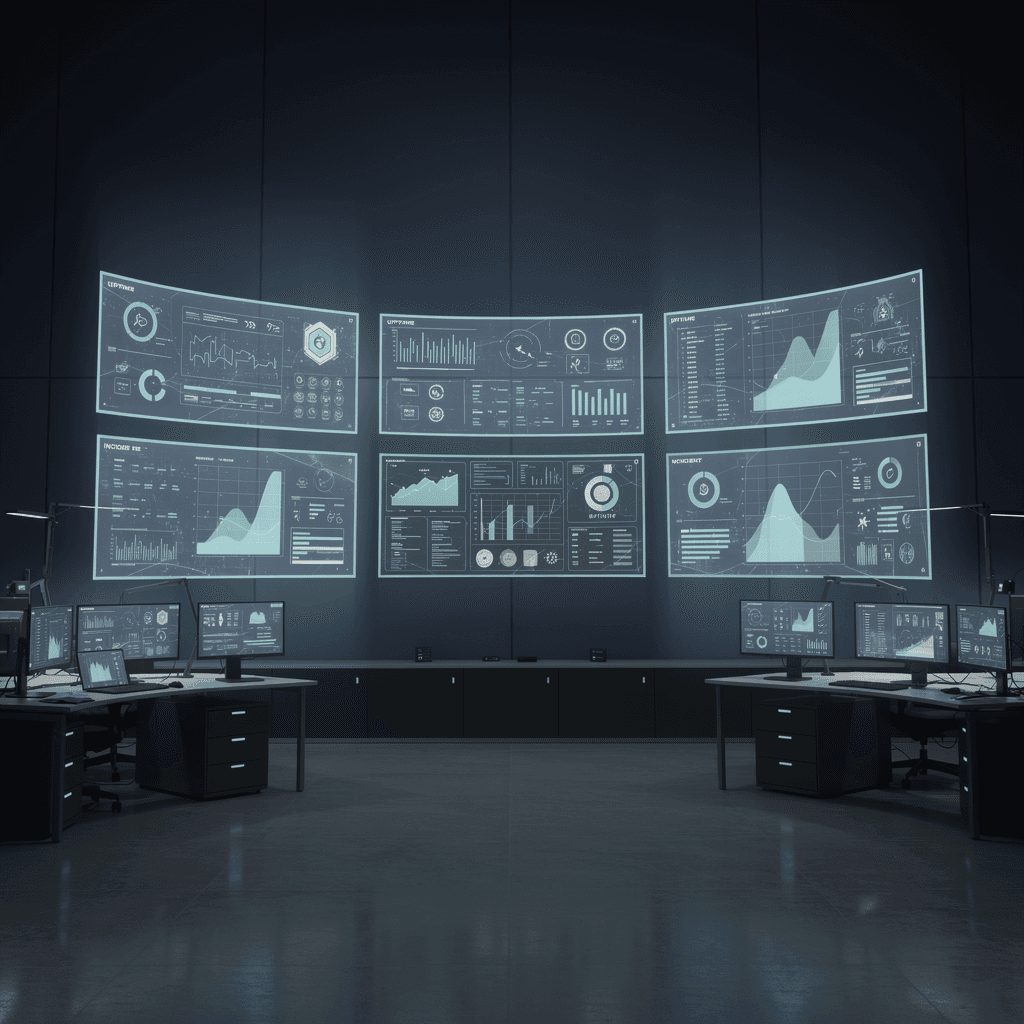
Platform Health at a Glance
The measures we monitor across managed environments
99.9%
Uptime
1,247
Incidents Resolved
Avg Resolution
SLA Compliance
Uptime reflects ServiceNow's platform availability, which our operations protect.
Platforms don't fail at go-live. They fail when no one's watching.
Enterprise platforms require ongoing attention to remain effective. Without dedicated operations, systems degrade, data quality declines, and automation becomes unreliable.
TriluxTech provides managed platform operations to ensure systems are reliable, optimized, and evolving — long after initial implementation.
See how a well-run ServiceNow environment holds up through incidents, audits and security events.
A Day in Managed Ops
24/7 coverage with structured processes at every phase.
Review overnight alerts, prioritize issues, prepare daily briefing
System health checks, performance reviews, capacity planning
Active incident management, root cause analysis, stakeholder updates
Performance tuning, automation improvements, technical debt reduction
Status sync, issue escalation, documentation updates
Automated surveillance, critical alert response, scheduled maintenance
The TriluxTech Difference
What sets our operations apart.
Proactive Issue Prevention
We identify and resolve issues before they impact users, using predictive monitoring and trend analysis.
Unified Observability
Single pane of glass across all platform components — no more switching between siloed tools.
Rapid Incident Resolution
14-minute average resolution time with documented runbooks and experienced responders on every shift.
Continuous Optimization
Regular performance tuning, capacity planning, and architecture reviews to prevent drift.
Knowledge Preservation
Documented processes, runbooks, and decision logs — knowledge lives in the system, not individual heads.
What We Monitor
ITSM
Incident, problem, change management
ITOM
Event management, discovery, service mapping
CMDB
Configuration accuracy, relationship integrity
Security
Access controls, compliance, vulnerability
Integrations
API health, data flows, error rates
Performance
Response times, throughput, capacity
Operations determine whether a platform continues to deliver value — or slowly becomes a liability.
Platform Uptime
Avg Resolution Time
Coverage
Uptime reflects ServiceNow's platform availability, which our operations protect.
Key Facts
- 24/7 coverage across a six-stage daily cycle: morning triage, proactive monitoring, incident response, platform optimisation, shift handoff, overnight monitoring
- Monitored surfaces: ITSM, ITOM, CMDB, Security, Integrations, Performance
- Documented runbooks and decision logs, so operational knowledge is not held by individuals
- Regular performance tuning, capacity planning and architecture review
- Root cause analysis with stakeholder communication during incidents
- Takes over platforms implemented by other partners
- ServiceNow Select Partner
Frequently Asked Questions
What does managed operations cover?
Continuous monitoring of ITSM, ITOM, CMDB, security, integrations and platform performance; incident response with root cause analysis; scheduled maintenance; performance tuning and capacity planning; and architecture review as the estate changes.
Is coverage 24/7?
Yes. The daily cycle runs from morning triage of overnight alerts through proactive health checks, incident response, optimisation, documented shift handoff, and automated overnight surveillance.
How is this different from staff augmentation?
Managed Operations is an outcome engagement: TriluxTech owns platform health, monitoring and incident response against defined commitments. Capacity as a Service places specialists into a client's own team, where the client retains ownership and direction.
Will you take over a platform someone else built?
Yes. Transition starts with discovery of the current estate — architecture, customisations, integrations and operational history — followed by runbook creation before assuming day-to-day responsibility.
What happens during an incident?
Triage and containment first, then root cause analysis and stakeholder updates while the fix proceeds. Findings and the resolution path are recorded in the decision log and folded back into runbooks and monitoring thresholds.
Platforms don't fail at launch.